
Fragmentation
Without a catalog, there is no single version of the data.
The proliferation of cloud environments, legacy systems, and specialized applications is creating increasingly fragmented data ecosystems. The result: different definitions for the same indicator depending on the area, and recurring arguments about which version is correct.
The proliferation of cloud environments, legacy systems, and specialized applications is creating increasingly fragmented data ecosystems. The result: different definitions for the same indicator depending on the area, and recurring arguments about which version is correct.

AI and governance
The same AI that scales the business can govern its data
More and more organizations are driving AI projects for business purposes, while the governance of that same data continues to rely on manual controls. Generative AI can also be applied to catalog assets, detect sensitive data, and proactively monitor risk.

Talent
Data governance has a talent problem, not just a technology problem.
Data governance professionals are scarce and increasingly in demand, according to surveys by Michael Page and IBM. Without people to champion it, no policy or tool will suffice.
Data governance professionals are scarce and increasingly in demand, according to surveys by Michael Page and IBM. Without people to champion it, no policy or tool will suffice.
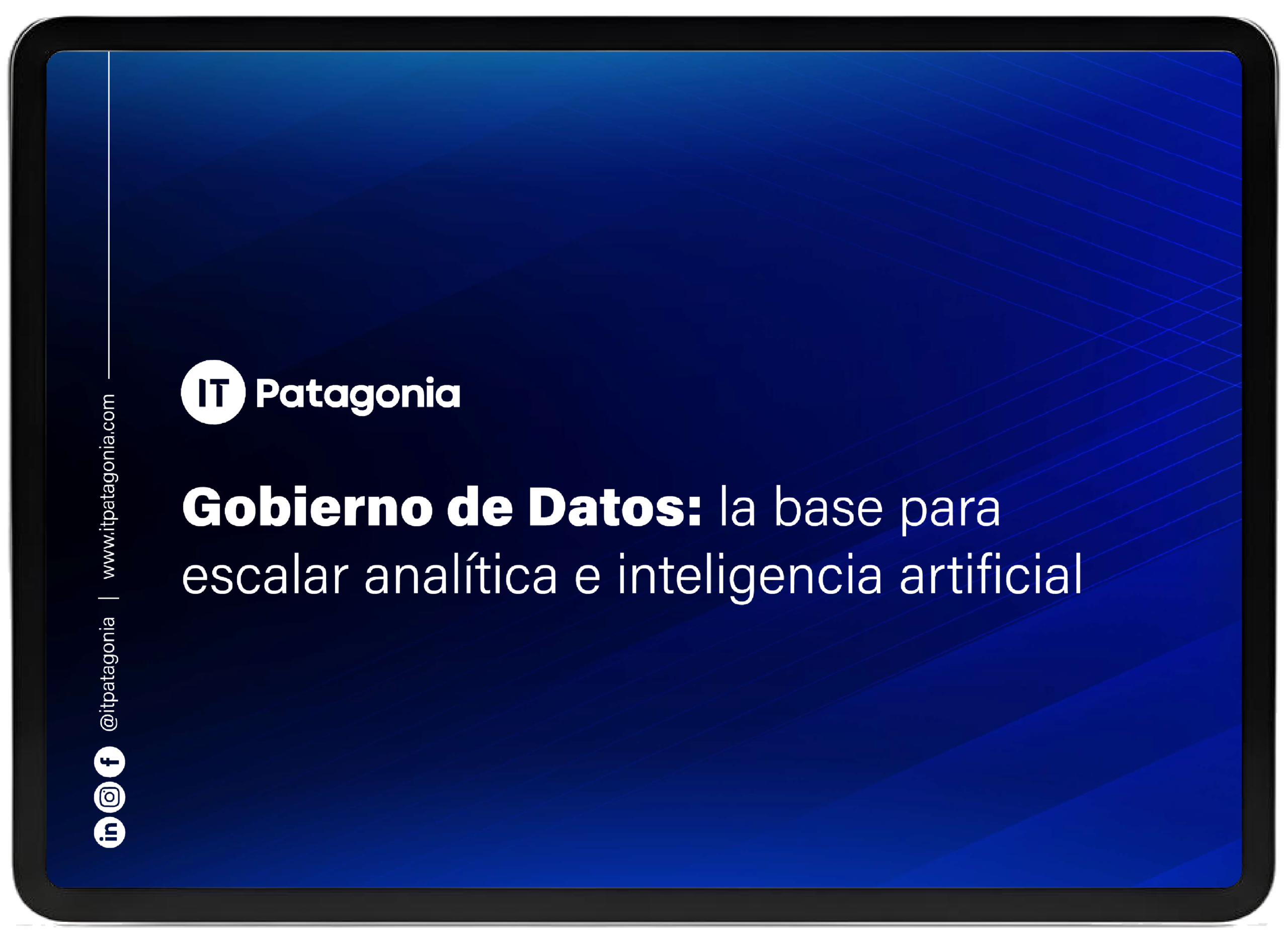
 Signs of low maturity in data governance and how they impact the business.
Challenges and trends that are redefining data governance in 2026.
Criteria for prioritizing a governance program based on your starting point.
The four pillars that support a modern strategy: policies, technology, culture, and ownership.
Key roles: Chief Data Officer, Data Owners, Data Stewards and data committee.
A phased roadmap to implement, measure and evolve capabilities, with specific deliverables and metrics for each stage.
Signs of low maturity in data governance and how they impact the business.
Challenges and trends that are redefining data governance in 2026.
Criteria for prioritizing a governance program based on your starting point.
The four pillars that support a modern strategy: policies, technology, culture, and ownership.
Key roles: Chief Data Officer, Data Owners, Data Stewards and data committee.
A phased roadmap to implement, measure and evolve capabilities, with specific deliverables and metrics for each stage.